Leap Years -Superstitions and All! Women Have The Right To Propose !

[caption id="attachment_5544" align="alignleft" width="300"]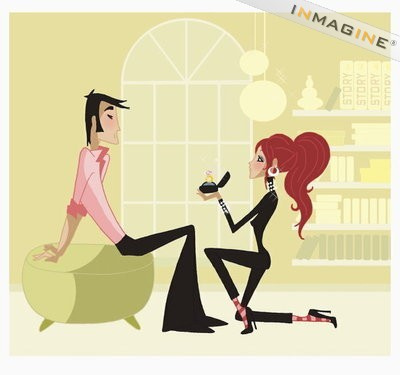 http://www.sodahead.com/[/caption]
Ladies, Get Ready: Its a Leap Year!
Ever since the idea of an extra day every four years was implemented as a corrective measure for the calendar, it has been filled with traditions and superstitions.One of these is the (shocking!) idea that a woman may propose to a man on February 29th (or anytime during a Leap Month or even the whole Leap Year), instead of the other way around.
The right of a woman to propose is also said to derive from early English law, which did not recognize the Leap Day as a real day. Because it was not a “real” day, many traditions were also ignored.
Still another legend has it that in 1288, Scotland made it legal for women to propose to men not only on Leap Day, but anytime in a Leap Year. If the man said no, then he was supposed to buy her presents ranging from dresses to gloves.
Whatever the origin, the legend naturally led to some fun. Leap Year parties and dances in which the women could ask the men out flourished. It was also an opportunity for humorists to poke fun at single women and the power they suddenly held in a proposal.
Related Stories

Virat Kohli's Cricket Legacy: Individual Excellence in Collective Sport
Virat Kohli's cricket career represents one of sport's most sustained examples of individual excellence achieving institutional dominance. From mercurial young batsman with technical flaws to disciplined master accumulat...

Tier-1 City Problems: Congestion, Pollution, Infrastructure Limits
Delhi's air quality deteriorates into hazardous territory with seasonal regularity. During winter months, Air Quality Index readings frequently exceed 400—well into the "hazardous" range where outdoor activity becomes me...

The New Indian Middle Class: Aspirations, Anxieties, Consumption
India's middle class—roughly 250-350 million people with annual household incomes between ₹10 and ₹50 lakh—represents a purchasing power that shapes entire economies. Yet their consumption patterns reveal a psychology di...